The bias of a bowl is key to the game of bowls, but it can be a confusing concept for many beginners. Why does a bowl turn? And how do I know which way it’s going to turn? These are common questions many new bowlers have. In this guide we will look to cover the basics of what the bias is, how it works, and how to know which side the bias is on.
Do bowls have a bias?
Lets cover the absolute basics first, “do bowls have a bias”? Yes, bowls have a bias on one side of the bowl. The bias is the sole reason for the bowl bending on its journey up the green. There is no technique used by the bowler to make this turning action happen.
It is a common misconception to assume the bowl has a weight embedded within the bowl – this is incorrect.
The bias of a bowl is achieved through shaping one side, so that it is not perfectly round. The shape achieved by the manufacturer will provide a certain amount of turn.
Modern bowl manufactures can also impact many other aspects of the bowls trajectory, including when the bowl starts to turn and how much it turns as it begins to slow, all of which is determined by the design of the bias of the bowl.
How do you know the bias on a bowl?
The level of bias on a bowl will be determined by the manufacturer.
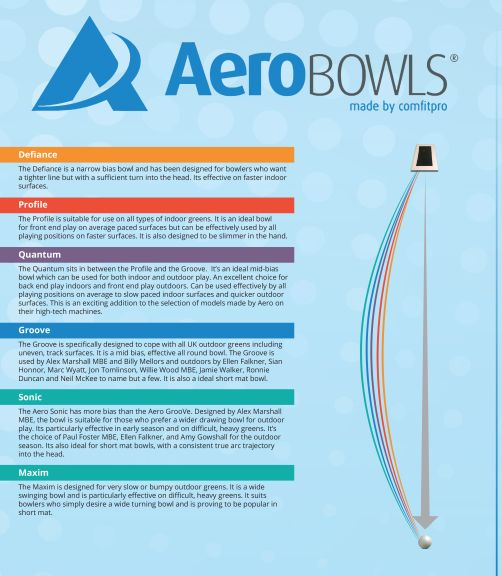
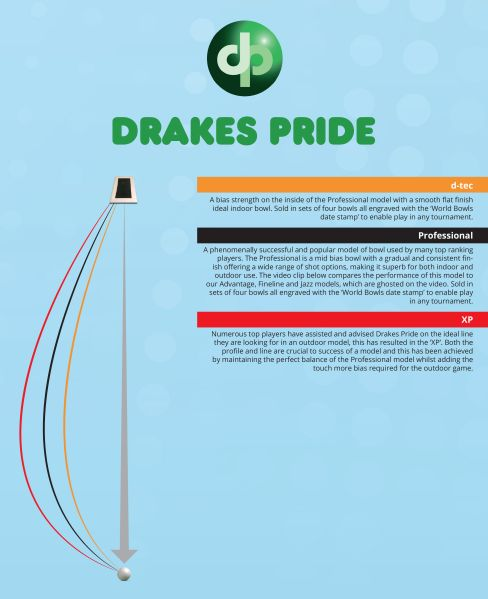
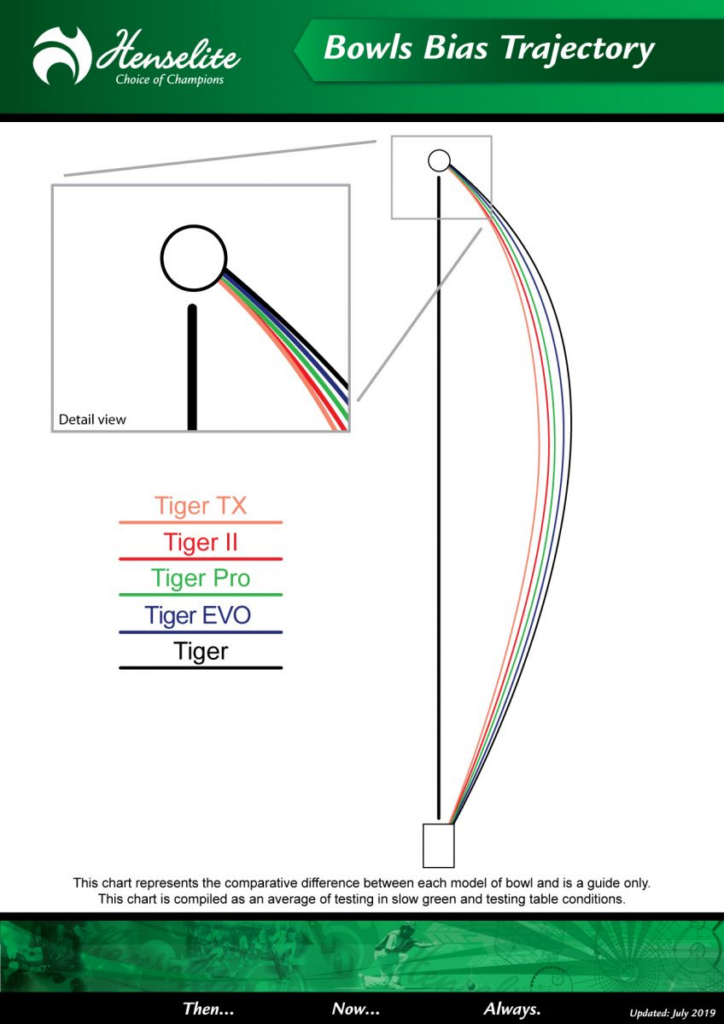
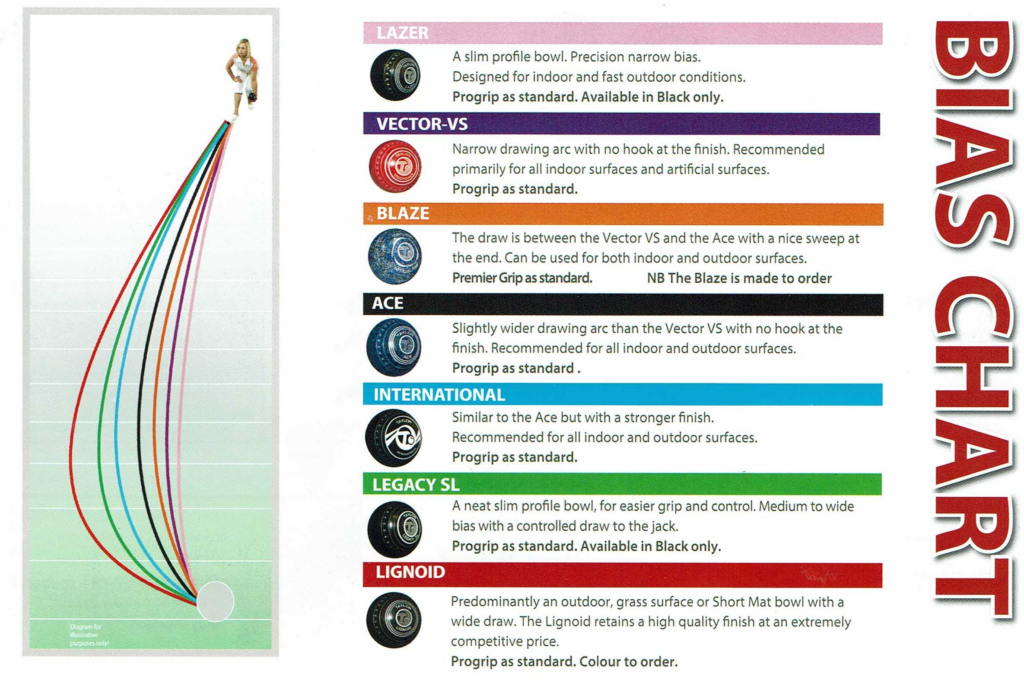
Manufacturers (such as Drakes Pride, Taylor and Aero) produce specific models, with each model having a set amount of bias – also known as the “bias strength”. All manufactures have a range of bowls, each with a different strength of bias, giving you the option of getting a set with the amount of bias you are looking for.
If you have a set of bowls and are unsure what the bias strength is, you can look at the charts below.