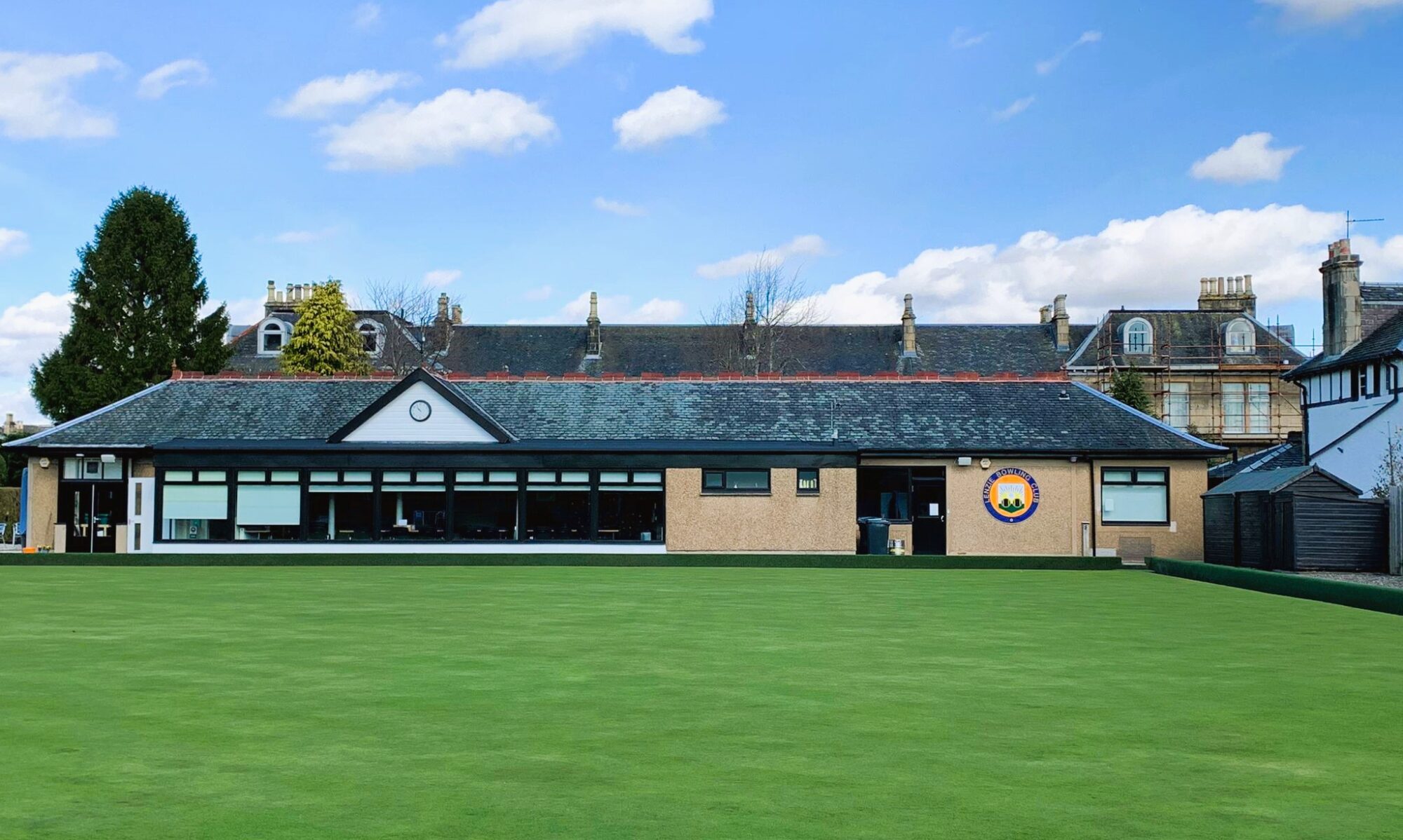
Dress appropriately and ensure that you know the dress code for each game or match in which you are participating. Do not show disrespect for your opponent(s) by arriving late, ensure that you leave sufficient time to change before the game. If you are representing the club on another bowling green you should remember that you are an ambassador for the Club so please behave appropriately.
Starting the Game
Enter and leave the bowling green by the steps provided. Do not walk across rinks that other people are using and do not stand or sit on the banks while waiting to play. Note that it is not the banks that are the main problem. We have artificial banks that will withstand some abuse but people sitting on the banks tend to place their feet on the edge of the green causing serious damage.
Introduce yourself if necessary and shake hands with your opponent(s) both before play commences and after the game is complete.
During the Game
During the game do not move around the head when your opponent is about to deliver his bowl. Stand well back from the head, keep quiet and do not do anything that would distract your opponent. Wait until the bowl has been delivered before moving.
If you are at the same end as the player delivering a bowl you must stand behind the mat, thus staying out of the player’s line of vision. Here is what the Bowls Scotland rule says about this. “Players of each team not in the act of playing or controlling play shall stand behind the Jack and away from the head or 1m behind the mat.“
Bear in mind that some people like to see the rink boundary markers and the centre pin while playing so make sure that you are not obscuring them. On sunny days you must also ensure that your shadow does not fall on the jack.
Spectators who are in the player’s line of vision should also keep still while bowls are being delivered and they should not distract players on the green. For example if you need to arrange a tie with another member don’t try to do this while he is playing someone else!
Lenzie have one of the best bowling greens in the area. Look after it! Don’t drop your bowls onto the green and ensure that your delivery is not causing scuff marks, either from your feet or your bowls, or otherwise damaging the green.
Place litter in the bins and ashtrays provided for this and do not spit on the green.
Observe the rules for possession of the rink on the Bowling Green!
Here is the SBA ruling on this ..
“Possession of the rink shall belong to the team whose bowl is being played. The players in Possession of the rink for the time being shall not be interfered with, annoyed, or have their attention distracted in any way by their opponents.
As soon as each bowl shall have come to rest, possession of the rink shall be transferred to the other team, time being allowed for marking a ‘toucher’. “
After you have delivered a bowl and before it has come to rest you have two options. If you want to track your bowl’s progress you must be behind the head as it stops. In other words you must beat it to the head. If you don’t go to the head you must be behind the mat as your bowl stops. This ruling is quite clear but unfortunately many players, including many of those who should know better, show disrespect for their opponents by failing to observe it.
How many times have you been on the mat, ready to play your bowl, when you have had to wait for your opponent to complete his stroll up the green or back to the mat? If your opponent is guilty of this you should ask him to stop. Remember that they are in the wrong.
The SBA website is a bit more succinct…. Here’s what it says about etiquette.
Bowling Green Etiquette Hints for Beginners
- Players should use the steps provided when going on or off the Bowling Green.
- Bowls should not be dropped on the Green.
- Do not stand on the verges.
- Matches, cigarette ends, etc., should be placed in the litter-baskets and not in the Ditches.
- Bowls should not be kicked in until the shot has been decided.
- After delivering a Bowl, a player should either retire behind the Mat or advance to the head. He should not take up a position in between.
- Don’t delay the game.
- Don’t wander around or move about the head when a player is about to deliver a Bowl.
- In a Fours Game, the ‘second’ keeps the score; in a Pairs Game the ‘Skip’ keeps the score.
- Bowling is a friendly game and all players should show courtesy and good sportsmanship.
- All Bowlers should know the Rules as laid down by the World Bowls Board.
- Mobile Phones should not be used on or around the green.
After the Game you should once again shake hands with your opponent(s) and congratulate/commiserate with them appropriately.
It is also customary to offer to buy them a drink if you have won the game. Where a marker has been involved in a singles game you should also offer him a drink.
Knowledge of the above will earn you respect as a bowler. So keep things friendly and contribute towards the enjoyment of the game for everyone involved, both on and off the green.
The Players’ Roles in Team Games on the Bowling Green
In all team games it is the skip’s job to direct the play. Other players should play the shot directed by the skip even if they don’t agree with it. In fours games the ‘third’ should direct the skip when required to do so. In Triples or Pairs the Second or Lead may do this. Other players should not interfere unless invited to do so.
Here is what rule 40 in the World Bowls Laws of the Sport says about players’ roles.
“40.1 The Skip
40.1.1 The skip will have sole charge of the team and all players in the team must follow the skip’s instructions.
40.1.2 The skip must decide all disputed points with the opposing skip, making sure that any decision reached is in line with the Laws of the Sport of Bowls.
40.1.3 If the skips need to check any part of the Laws of the Sport of Bowls before reaching a decision, they must ask the umpire for an explanation.
40.1.4 If the umpire considers that a decision reached by the skips is not in line with the Laws of the Sport of Bowls, the umpire must overrule that decision so that it is in line with the laws.
40.1.5 If the skips cannot reach agreement on any disputed point, they must ask the umpire to make a decision. The umpire’s decision is final.
40.1.6 If the Controlling Body has not appointed an umpire, the skips must choose a competent neutral person to act as the umpire.
40.1.7 The skip must:
40.1.7.1 be responsible for the score card supplied by the Controlling Body while play is in progress;
40.1.7.2 make sure that the names of all players of both teams are correctly entered on the score card;
40.1.7.3 record, on the score card, all shots scored for and against both teams as each end is completed;
40.1.7.4 compare and agree the score card with that of the opposing skip as each end is completed; and
40.1.7.5 at the end of the game, record on the score card the time that the game finished and then sign their own and the opposing skip’s score cards.
40.1.8 For domestic play, Member National Authorities can decide the procedures for using a scoreboard instead of one of the score cards.
40.1.9 For domestic play, Member National Authorities can transfer the skip’s duties described in law 40.1.7 to other members of the team. However, they must make sure that the duties are transferred to players whose positions, in order of play, are the same in each team.
40.1.10 Skips can, at any time, delegate their own powers and any of their own duties (except those described in law 40.1.7) to any other members of the team as long as they tell the opposing skip immediately.
40.2 The third
40.2.1 The third can measure any and all disputed shots.
40.2.2 The third can tell the skip the number of shots scored for or against their team as each end is completed.
40.3 The lead
The lead of the team to play first in an end must:
40.3.1 place the mat as described in law 6.1.1; and
40.3.2 deliver the jack and make sure that it is centred before delivering the first bowl of the end.
40.4 Other duties
Along with the duties mentioned in the previous paragraphs of law 40, players can carry out any other duties assigned to them by their skip as described in law 40.1.10.“
It is also worth emphasising that the head must not be disturbed by any player until the shots have been finally agreed. When the Thirds or Skips are deciding the shots the other players should stand well back from the head and give them the space to do so.
During the game encourage your team mates, do not criticize them. Commend good shots and learn to accept that flukes are a part of the game. Sometimes they go for you, sometimes against.
Etiquette for Markers on the Bowling Green
“So if you would a Marker be
Then make it worth your while
To do the job quite capably
And do it with a smile.”
During the season, when we are heavily involved in singles ties, markers are required every evening. Consider making yourself available as a marker whenever you can. We all know that there is nothing worse than playing an important tie without a marker.
It is not good etiquette to watch games from the sidelines or from the clubhouse while there are people playing without markers. If you have the time, get out there and mark a tie!
The etiquette within the Club is to offer to mark the tie which started earliest on the green – using this approach should free up the rink earlier, for additional play.
If you are marking a tie the following rules should be observed.
When a player has delivered the jack the marker should centre it then stand back and to one side, ensuring that all rink markers are visible to the players.
He/She should answer any specific question (from the player in possession of the rink) about the state of the head. He/She should not offer any additional information that has not been requested. For example if someone asks, “Who lies the shot?”, that question alone should be answered, e.g. “you are” or “your opponent”. You should not say anything like, “You are lying two shots”, or offer advice.
If you are unsure of the situation, for example you cannot decide who is lying, don’t guess. You can offer an opinion but make sure that the player who is asking the question is made aware of this.
The marker should mark all touchers immediately they come to rest and remove chalk marks from non-touchers. He/She should also remove all dead bowls from the rink with the players’ agreement. They should also mark the position of touchers and or the Jack which are in the ditch.
The marker should not move any bowls until the end is complete and the players have agreed the number of shots.
He/She shall measure disputed shots when required but once again no bowls should be moved by the marker until the players agree the shots for the end. If an umpire is available then he/she may be called upon for a decision. Where no umpire is available the marker may select one. Both players may also agree that the marker should make the decision. This is acceptable at local level.
Deciding the shot after an end has played
In team games this is the responsibility of the skip, but in practise the skip will permit their partner in pairs, the second in triples and the third in a rink to decide – they will after all be the most senior person in the team at the head – the skip having just played their bowls.
In singles the players will decide between them.
It would be customary for the player believing that they hold shot or shots to claim the result of the end (saying something like “two shots to me/us”). It would then be for the opponent to agree, or to seek to have the position measured where they are not certain or cannot agree.
Opponents should agree who will measure – generally this will be the players or the marker (or Umpire where required or available) It is normal to give the courtesy of time to decide. Bowls looking likely to be at risk of falling over should be propped up carefully (using a suitable wedge) after allowing 30 seconds to elapse. Do not remove any bowls from the head without agreement from your opposition, and use your hands preferably to avoid accidentally moving bowls.
Please read the Laws of the Game – this is as good a website to find the rules as any,
http://www.worldbowls.com/laws-umpiring/laws-of-the-sport/